The story behind
The Memory Shield
The Memory Shield exists because the science of Alzheimer’s prevention is clearer than ever — and almost nobody is translating it into plain language that busy adults can actually use.
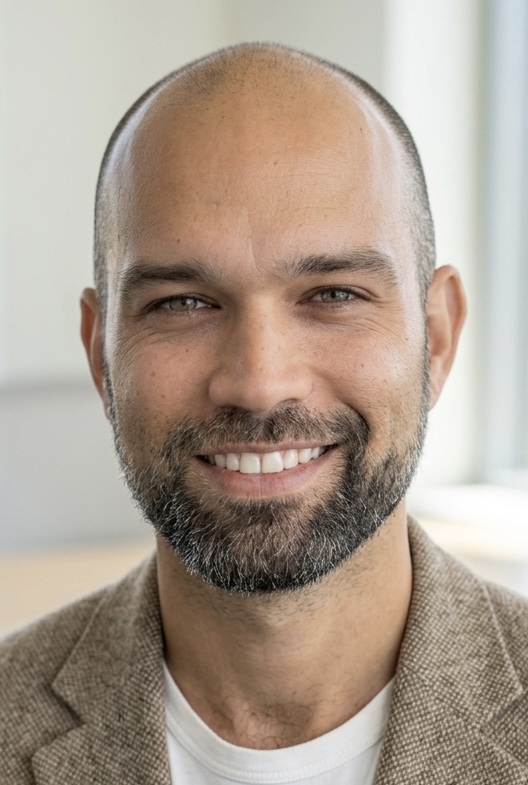
Miguel Hernandez
Founder & Writer, The Memory Shield
I watched my grandmother disappear slowly. Not all at once — which somehow made it harder. First her keys, then her stories, then her name for me. By the time the doctors had a word for it, most of the years we could have done something were already behind us.
What haunted me most wasn’t the grief. It was learning — after — that the science of prevention had been building for decades. Sleep, movement, stress, diet, connection: these aren’t wellness platitudes. They are the levers the research identified as modifiable risk factors, published in the Lancet, replicated across continents. Nobody had translated them into something a normal person could act on.
I’m not a doctor or a neuroscientist. I want to be upfront about that. What I am is a careful reader who has spent thousands of hours in the primary literature so you don’t have to. Every claim on this site traces back to a peer-reviewed source. If I can’t cite it, I don’t publish it.
The Memory Shield is the resource I wish had existed when my family needed it. My goal is simple: give you the clearest possible picture of what the science says, what you can do today, and how to tell the signal from the noise.
What “evidence-based” actually means here
In a space full of bold claims, these are the standards every article on The Memory Shield is held to — before it’s published.
Peer-reviewed sources only
Every health claim cites a published study from a peer-reviewed journal. We prioritise systematic reviews and meta-analyses over single studies, and flag where evidence is preliminary.
Lancet, NIH & Harvard standard
Our primary sources include the 2024 Lancet Commission on Dementia Prevention, NIH-funded studies, and research from Harvard T.H. Chan School of Public Health. Sources are linked in every article.
No fear, no hype
Alzheimer’s prevention is not a supplement protocol or a 30-day programme. We don’t sell certainty we don’t have. Where evidence is strong, we say so clearly. Where it’s preliminary, we say that too.
Ready to understand your
real risk?
Take the free Brain Health Quiz — 14 questions, a personalised risk profile, and actionable steps matched to your habits.